
Economic Substance Regulations (ESR) in the UAE have changed, but they have not become irrelevant. While businesses are no longer required to submit new ESR notifications or reports for financial years ending after 31 December 2022, historical obligations may still matter. More importantly, the concept of adequate economic substance continues to play a role under the UAE Corporate Tax regime, particularly for Qualifying Free Zone Persons (QFZPs).
For businesses in Dubai and across the UAE, understanding the difference between the old ESR framework and today’s Corporate Tax requirements is essential for staying compliant.
Is ESR Still Applicable in the UAE in 2026?
The short answer is: not as an ongoing standalone reporting requirement.
In October 2024, the UAE Ministry of Finance announced that ESR notification and reporting requirements were cancelled for financial years ending after 31 December 2022, following Cabinet Decision No. 98 of 2024.
However, this does not mean all ESR-related responsibilities disappeared.
Businesses remain responsible for their historical ESR obligations for applicable periods, including responding to information requests from the relevant authorities and addressing any penalties that may apply. The UAE Ministry of Finance continues to provide access to its Economic Substance Regulations resources for businesses that need to review the previous framework.
So, if your business was subject to ESR between 2019 and 2022, it is worth checking whether all historical requirements were properly addressed.
Why Does Economic Substance Still Matter?
Although standalone ESR reporting has ended, economic substance remains relevant under UAE Corporate Tax.
This is particularly important for companies operating in Free Zones and seeking treatment as a Qualifying Free Zone Person (QFZP).
The Federal Tax Authority states that a Free Zone entity must maintain adequate substance in the UAE to qualify as a QFZP, alongside other conditions such as earning Qualifying Income and complying with applicable transfer pricing requirements.
In practical terms, businesses should be able to demonstrate that their UAE operations have sufficient resources and genuine activities to support the income they earn.
This can include factors such as:
- Qualified full-time employees
- Adequate operating expenditure
- Appropriate physical assets
- Core income-generating activities performed in the Free Zone
- Appropriate oversight of outsourced activities
The FTA’s guidance explains that adequate substance is assessed in relation to the nature and level of activities performed by the business.
ESR vs Corporate Tax Substance: What’s the Difference?
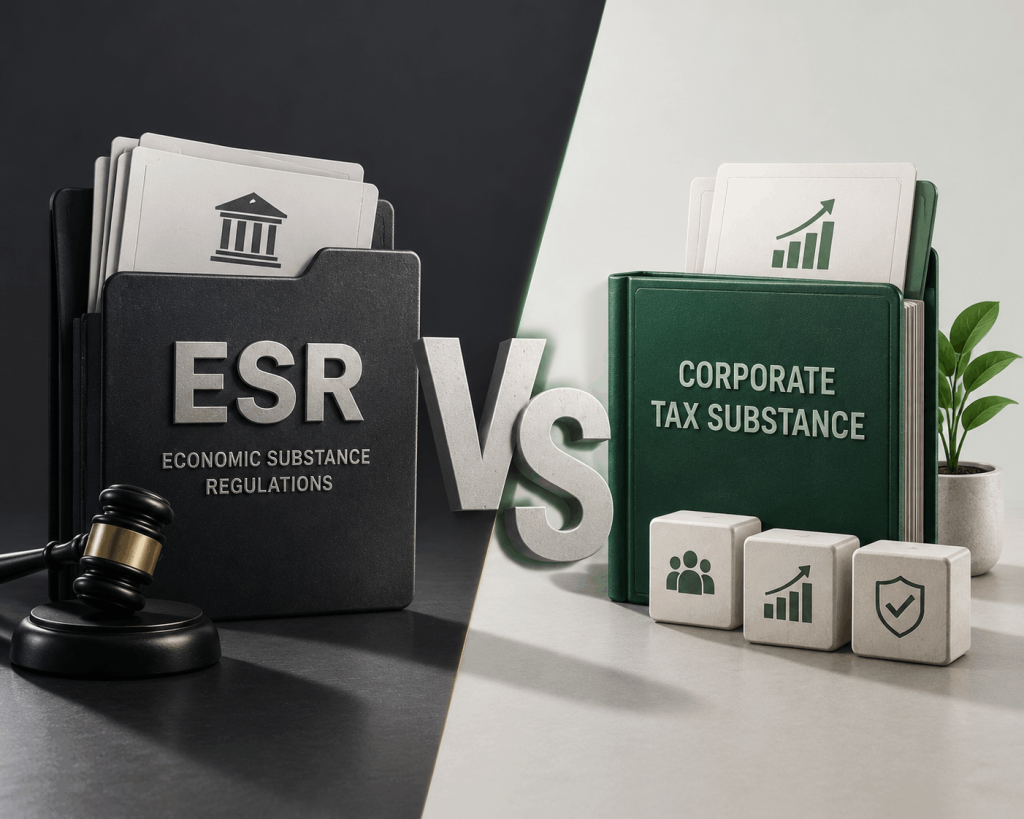
One of the biggest areas of confusion for UAE businesses is assuming that ESR and Corporate Tax substance requirements are the same thing.
They are not.
ESR was a specific regulatory framework requiring businesses carrying out certain Relevant Activities to demonstrate economic substance in the UAE.
Corporate Tax substance requirements, on the other hand, form part of the conditions that can apply to businesses seeking QFZP status.
The distinction is important because businesses should not continue preparing annual ESR reports simply because they previously had an ESR obligation.
At the same time, Free Zone businesses should not assume that the end of ESR reporting means they can ignore the substance of their UAE operations.
Digits’ Corporate Tax advisory team provides further insight into adequate substance, Qualifying Income and other QFZP requirements.
What Should UAE Businesses Do in 2026?
Even if your business does not have a current ESR filing obligation, a few practical steps can help reduce compliance risks.
1. Review Your Historical ESR Position
If your company operated during the 2019–2022 ESR period, check whether it carried out any Relevant Activities and whether the applicable notifications and reports were submitted.
This is particularly important if your company has changed accountants, tax advisers, ownership or corporate structure since then.
2. Review Your Corporate Tax Position
Businesses should now focus on their current UAE Corporate Tax obligations rather than relying on old ESR checklists.
This is especially important for Free Zone businesses claiming QFZP treatment. The FTA confirms that maintaining adequate substance is one of the conditions for QFZP status.
You can also review the FTA’s current Corporate Tax legislation and guidance for the latest requirements. The FTA’s legislation portal was updated as recently as July 2026, demonstrating that the UAE Corporate Tax framework continues to evolve.
3. Maintain Proper Financial and Operational Records
Businesses should maintain evidence that supports their UAE operations.
Depending on the nature of the business, this may include:
- Employee and payroll records
- Office or premises documentation
- Asset records
- Operating expenses
- Contracts and agreements
- Management records
- Accounting records
- Documentation supporting outsourced activities
Accurate accounting records can make it easier to demonstrate the financial and operational reality of a business. Digits provides accounting and bookkeeping services in the UAE to help businesses maintain structured, accurate and audit-ready financial records.
4. Keep Corporate Tax and Financial Records Aligned
Your accounting records, Corporate Tax return and supporting documentation should present a consistent picture of how your business operates.
This becomes particularly important for Free Zone businesses where the distinction between qualifying and non-qualifying activities can affect the applicable Corporate Tax treatment.
Professional financial reporting and advisory services can help businesses strengthen reporting, internal controls and regulatory documentation.
How Can Digits Add Value?
Navigating the transition from ESR to the UAE Corporate Tax framework can be challenging, especially for businesses that have historical ESR obligations alongside current tax requirements.
Digits can help UAE businesses manage these requirements through an integrated accounting, tax and advisory approach.
Historical ESR Review
Businesses can review their previous ESR position and identify potential gaps relating to historical periods.
Corporate Tax Compliance
Digits helps businesses understand and manage their current Corporate Tax obligations through Corporate Tax services in the UAE.
Accounting and Documentation
Well-maintained financial records provide the foundation for effective tax compliance. Digits’ accounting and bookkeeping services can help maintain accurate records and supporting schedules.
Audit and Assurance
For businesses that need stronger financial controls and audit readiness, audit and assurance services can help identify gaps and strengthen financial reporting processes.
With experience across accounting, tax, audit and financial advisory, Digits helps businesses stay prepared as UAE regulations continue to evolve.
Final Thoughts
ESR may no longer require annual reporting in 2026, but businesses should not ignore economic substance.
For most UAE companies, the focus has shifted from standalone ESR reporting to Corporate Tax compliance, Free Zone requirements and maintaining evidence of genuine UAE business operations.
If your company operated under the previous ESR framework or currently operates from a UAE Free Zone, reviewing your compliance position can help identify potential gaps before they become costly.
Need help with UAE accounting, Corporate Tax or compliance?
Follow Us:
FAQ
Generally, no. ESR notifications and reports are no longer required for financial years ending after 31 December 2022. However, historical ESR obligations may still need to be addressed.
The reporting requirements were cancelled for financial years ending after 31 December 2022. Businesses may still have responsibilities relating to earlier ESR periods.
Yes. Maintaining adequate substance in the UAE is one of the conditions for qualifying as a QFZP under the UAE Corporate Tax regime.
No. Adequate substance depends on the nature and level of the business’s activities and can involve employees, assets and operating expenditure in the UAE.
Yes. Businesses should retain relevant records and be prepared to respond to requests concerning historical ESR obligations.