
E-invoicing in the UAE is set to transform how businesses manage invoicing and VAT compliance. This blog explains what e-invoicing means, how it differs from traditional PDF or paper invoices, who will be impacted, and why early preparation matters. It also highlights compliance benefits, operational advantages, and practical steps businesses can take to stay future-ready as the UAE moves towards a regulated e-invoicing framework
Introduction
The UAE is steadily moving towards a more digitised and transparent tax ecosystem, and e-invoicing in UAE is a key part of this transformation. This shift is being driven by initiatives and guidance from the Federal Tax Authority (FTA), which oversees VAT and tax compliance across the country. With the Federal Tax Authority (FTA) focusing on improving VAT compliance and transaction transparency, businesses across the country are preparing for the shift towards electronic invoicing.
Whether you are a VAT-registered SME, a growing enterprise, or a large organisation, understanding e-invoicing is critical for future compliance, operational efficiency, and risk management. This guide explains what e invoicing means in the UAE, how it works, who it impacts, and how businesses can prepare.
What Is E-Invoicing in UAE?
E-invoicing (electronic invoicing) refers to the creation, exchange, validation, and storage of invoices in a structured digital format between suppliers, customers, and tax authorities.
Unlike traditional paper or PDF invoices, e-invoices:
- Are generated electronically
- Follow a standardised data structure
- Can be automatically validated
- Reduce manual intervention and errors
- Enable easier tax reporting and audits
In the UAE, e-invoicing is being introduced to improve VAT compliance, increase transparency in business transactions, and modernise tax administration systems.
Is E-Invoicing Mandatory in UAE?
At present, e-invoicing is not yet fully mandatory in the UAE. However, the Federal Tax Authority has clearly indicated that a phased rollout of a structured e-invoicing system is planned. These developments align with broader UAE government digital transformation initiatives aimed at modernising public and private sector processes.
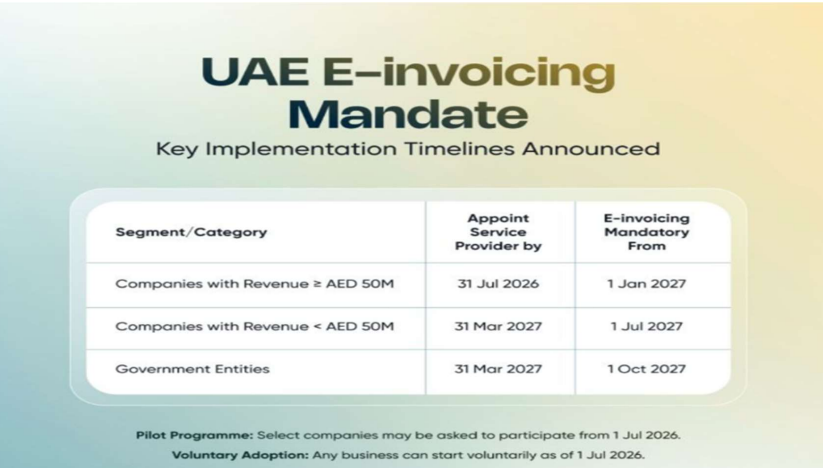
What the FTA Has Indicated
- UAE is moving towards a regulated e-invoicing framework
- Businesses will be required to issue compliant electronic invoices
- Integration with VAT reporting and audits is expected
- Large taxpayers and selected sectors may be prioritised
Businesses that prepare early will face fewer operational challenges once e-invoicing becomes mandatory.
Difference Between E-Invoicing and Normal Invoicing
Many businesses assume that sending invoices as PDFs via email qualifies as e-invoicing. This is incorrect. The key differences are outlined below:
| Normal Invoicing | E-Invoicing |
| Paper or PDF invoices | Structured electronic format |
| Manual processing | Automated processing |
| Higher error risk | Built-in validations |
| Limited compliance checks | Regulatory compliance enabled |
| No real-time reporting | Easier audit and reporting |
E-invoicing ensures invoices meet regulatory standards before they are issued or accepted.
Who Will Be AƯected by E-Invoicing in UAE?
Once implemented, e-invoicing will impact almost all VAT-registered businesses in the UAE.
Small and Medium Enterprises (SMEs)
- Retail businesses
- Service providers
- Trading companies
- Startups registered for VAT
Large Enterprises
- Corporates with high transaction volumes
- Businesses with multiple branches
- Organisations involved in cross-border trade
Accounting and Finance Teams
- Changes in invoicing workflows
- Requirement for system upgrades
- Increased automation and reporting responsibilities
How E-Invoicing Will Impact VAT Compliance in UAE
E-invoicing is closely linked to VAT compliance and will significantly change how businesses manage tax reporting. The approach mirrors international best practices promoted by global bodies such as the OECD, which support digital tax administration and real-time reporting.
Key Impacts
- Improved accuracy in VAT calculations
- Reduced manual data entry errors
- Easier reconciliation of invoices
- Better audit readiness
- Lower risk of non-compliance penalties
Structured invoice data allows businesses to maintain cleaner records and respond efficiently to FTA audits.
Benefits of E-Invoicing for Businesses in UAE
Beyond compliance, e-invoicing oƯers several operational and financial benefits:
- Faster invoice processing and delivery
- Improved cash flow through quicker payments
- Reduced administrative and paper costs
- Enhanced financial visibility
- Scalable systems for growing businesses
These advantages make e-invoicing a strategic upgrade rather than just a regulatory requirement.
What Happens If Businesses Do Not Comply?
When e-invoicing becomes mandatory, failure to comply may result in:
- Administrative penalties
- Rejection of invoices
- VAT filing complications
- Increased scrutiny from the FTA
- Operational disruptions
Businesses relying on outdated invoicing systems may face last-minute compliance challenges.
How Can Businesses Prepare for E-Invoicing in UAE?
Preparation should begin well before formal mandates are enforced.
1. Review existing invoicing systems and workflows
2. Upgrade accounting or ERP software to support structured invoicing
3. Train finance and accounting teams on new processes
4. Seek professional guidance to ensure compliance and smooth implementation
Early preparation reduces risk and ensures business continuity
How Digits Can Help with E-Invoicing in UAE
Digits provides end-to-end support to help UAE businesses transition smoothly to einvoicing while maintaining full VAT compliance.
Our services include:
- E-invoicing readiness assessment
- Accounting system evaluation and setup
- VAT compliance alignment
- Process automation and optimisation
- Ongoing advisory and support
We work closely with businesses of all sizes to ensure compliance without disrupting day-to-day operations.
Final Thoughts
E-invoicing in the UAE represents a major step towards a smarter and more transparent tax environment. Businesses that act early will benefit from improved compliance, greater efficiency, and reduced operational risk.
Preparing now ensures your business remains compliant, competitive, and future-ready as the UAE moves towards mandatory e-invoicing.
Need Help with E-Invoicing in UAE?
If you need expert support with e-invoicing readiness, VAT compliance, or accounting system upgrades, connect with Digits today to get started.