
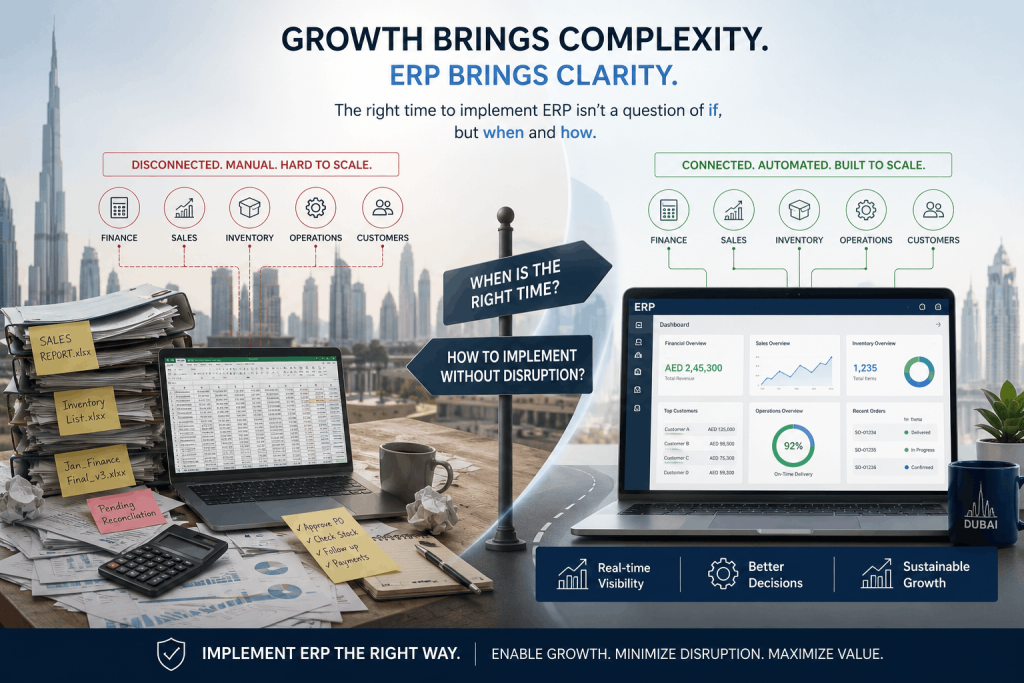
For SMEs in Dubai, growth brings complexity, more transactions, more customers, and more moving parts across finance, sales, inventory, and operations. While spreadsheets and disconnected tools may work in the early stages, they quickly become a barrier to scale.
The real question is not whether ERP (Enterprise Resource Planning) is needed, but when is the right time to implement it, and how to do it without disrupting business operations.
Why Timing Matters More Than the Tool
Many SMEs delay ERP adoption because existing systems feel “manageable.” However, the cost of waiting often shows up as:
- Delayed decision-making due to scattered data
- Operational inefficiencies and duplicate work
- Limited visibility across departments
- Increasing compliance risks
The right time to shift is before these issues begin affecting profitability and customer experience.
Clear Indicators Your SME Is Ready for ERP
Disconnected Systems Are Slowing You Down
If your teams rely on spreadsheets, emails, and multiple standalone tools to run daily operations, data silos are already impacting efficiency.
You Lack Real-Time Visibility
When leadership cannot access accurate, real-time insights into finances, sales, or inventory, strategic decisions become reactive instead of proactive.
Growth Is Becoming Difficult to Manage
As transaction volumes increase, manual processes create bottlenecks. Scaling without integrated systems leads to chaos rather than efficiency.
Compliance and Reporting Are Becoming Complex
Dubai’s regulatory environment requires accurate and timely reporting. If generating reports is time-consuming or error-prone, it signals the need for a more robust system. For official VAT guidelines and compliance requirements, refer to the UAE Federal Tax Authority: https://tax.gov.ae
From Tally to ERP: Building a Smarter Business Foundation
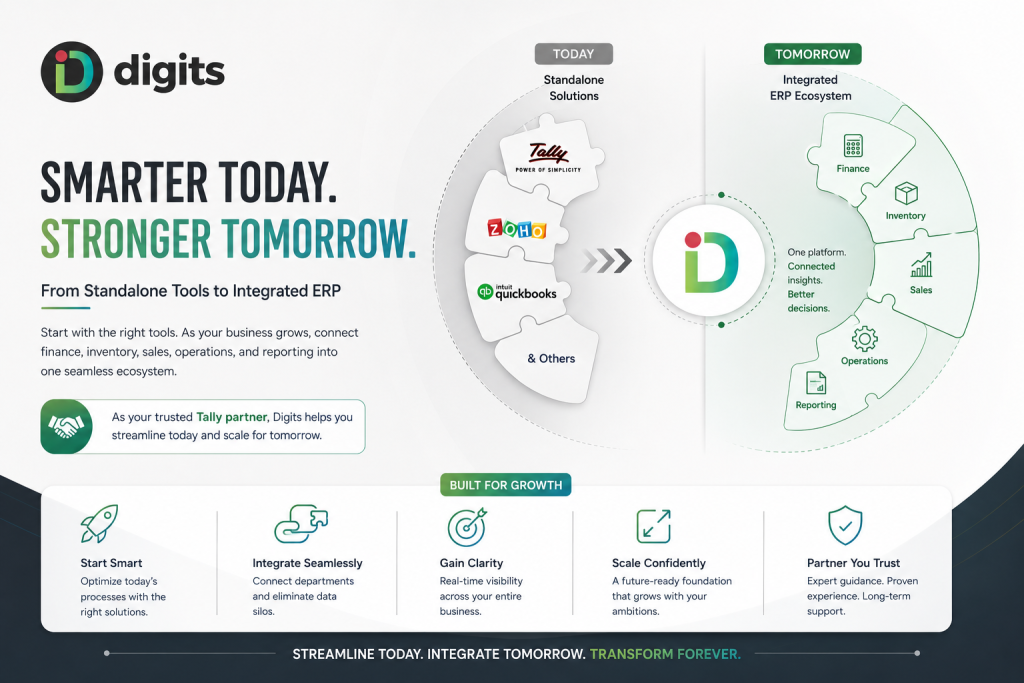
Many SMEs in Dubai begin their digital journey with accounting and business management solutions such as Tally, Zoho, QuickBooks, and other standalone systems for managing day-to-day financial operations. While Tally is highly effective for accounting, VAT management, and financial tracking, growing businesses often require deeper operational visibility and integration across departments.
As business complexity increases, companies start looking beyond standalone accounting processes toward integrated ERP ecosystems that connect finance, inventory, sales, operations, and reporting into a single workflow.
With the right technology consulting approach, businesses can optimize their existing systems while planning a scalable transition toward ERP implementation. As a trusted Tally partner, Digits helps businesses streamline financial operations and build a stronger foundation for long-term digital transformation.
What ERP Actually Solves for SMEs
ERP is not just software, it is a business operating system that connects all core functions into one platform. ERP is widely recognized across the industry as a unified system that connects core business functions into a single platform, a concept consistently highlighted across leading global technology frameworks and enterprise solution providers.
With the right ERP implementation, SMEs can:
- Centralize business data for better visibility
- Automate repetitive processes
- Improve coordination across departments
- Generate accurate, real-time reports
- Build a scalable foundation for growth
The Real Challenge: Implementation, Not Selection
Choosing an ERP system is only one part of the equation. The real success factor lies in how well it is implemented and aligned with business processes.
Many SMEs struggle because of:
- Poor requirement analysis
- Incorrect system selection
- Lack of customization
- Inadequate training and change management
This is where the role of a technology consulting partner becomes critical.
How the Right Consulting Partner Makes the Difference
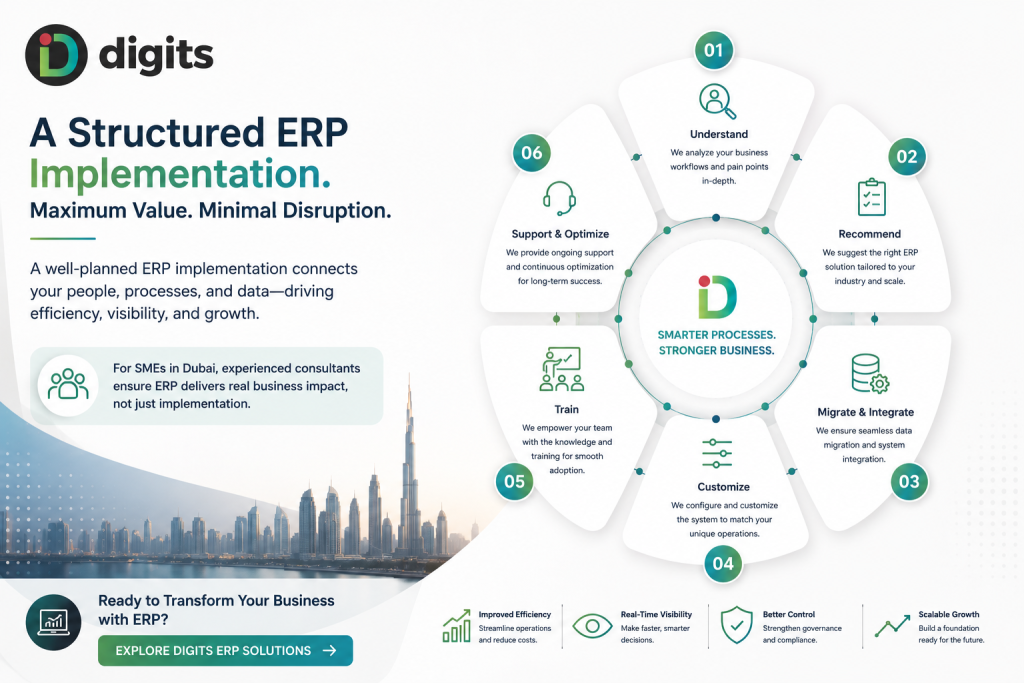
A structured ERP implementation ensures minimal disruption and maximum value. This includes:
- Understanding your business workflows and pain points
- Recommending the right ERP solution for your industry and scale
- Ensuring seamless data migration and integration
- Customizing the system to match your operations
- Training your team for smooth adoption
- Providing ongoing support and optimization
For SMEs in Dubai, working with experienced consultants ensures that ERP is not just implemented, but delivers measurable business impact.
If you are evaluating ERP for your business, explore how expert-led technology consulting can support your transition: Explore Digits ERP Solutions
When Should You Make the Shift?
The right time to implement ERP is when:
- Your current systems are limiting growth
- Decision-making is delayed due to lack of visibility
- Manual processes are increasing operational risk
- Compliance requirements are becoming harder to manage
Waiting too long increases complexity and cost. Moving at the right time ensures a smoother transition and faster ROI.
Conclusion
ERP is not about replacing tools, it is about transforming how your business operates.
For SMEs in Dubai, the shift to ERP should be strategic, well-timed, and guided by the right expertise. With a structured approach and the right consulting partner, businesses can move from fragmented operations to a unified, scalable system that supports long-term growth.
The value is not just in adopting ERP, but in implementing it the right way.
Transform Operations with Digits
Follow us on:
Read Our Other Blogs:
-
Economic Substance Regulations – ESR in 2026: What UAE Businesses Still Need to Know
Economic Substance Regulations (ESR) in the UAE have changed, but they have not become irrelevant. While businesses are no longer required to submit new ESR notifications or reports for financial years ending after 31 December 2022, historical obligations may still matter. More importantly, the concept of adequate economic substance continues to play a role under
-
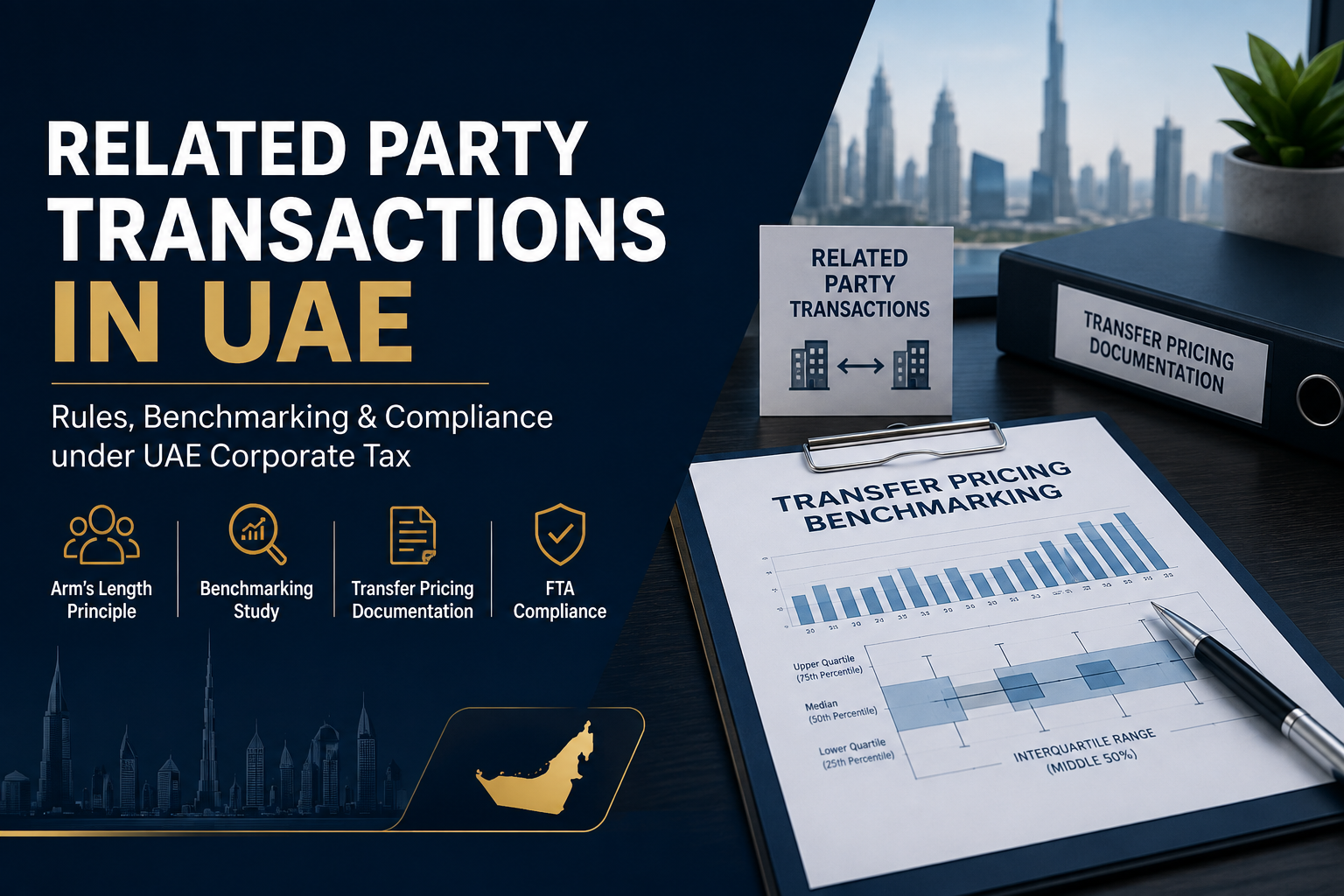
Related Party Transactions Explained: What Every Business Needs to Know
Businesses frequently transact with companies or individuals they share a close relationship with. These dealings, known as Related Party Transactions (RPTs), are common among corporate groups, family-owned businesses, subsidiaries, and companies with common ownership. While such transactions are perfectly legitimate, they require careful documentation and transparency to ensure they are conducted fairly. With the introduction
-

Small Business Relief Ends December 2026: What Happens to Your Tax Position Next?
The UAE’s Small Business Relief (SBR) has helped thousands of SMEs transition smoothly into the Corporate Tax regime. Eligible businesses with annual revenue of AED 3 million or less can elect for Small Business Relief and treat their taxable income as nil for qualifying tax periods. However, this relief is temporary. Unless the tax authorities