
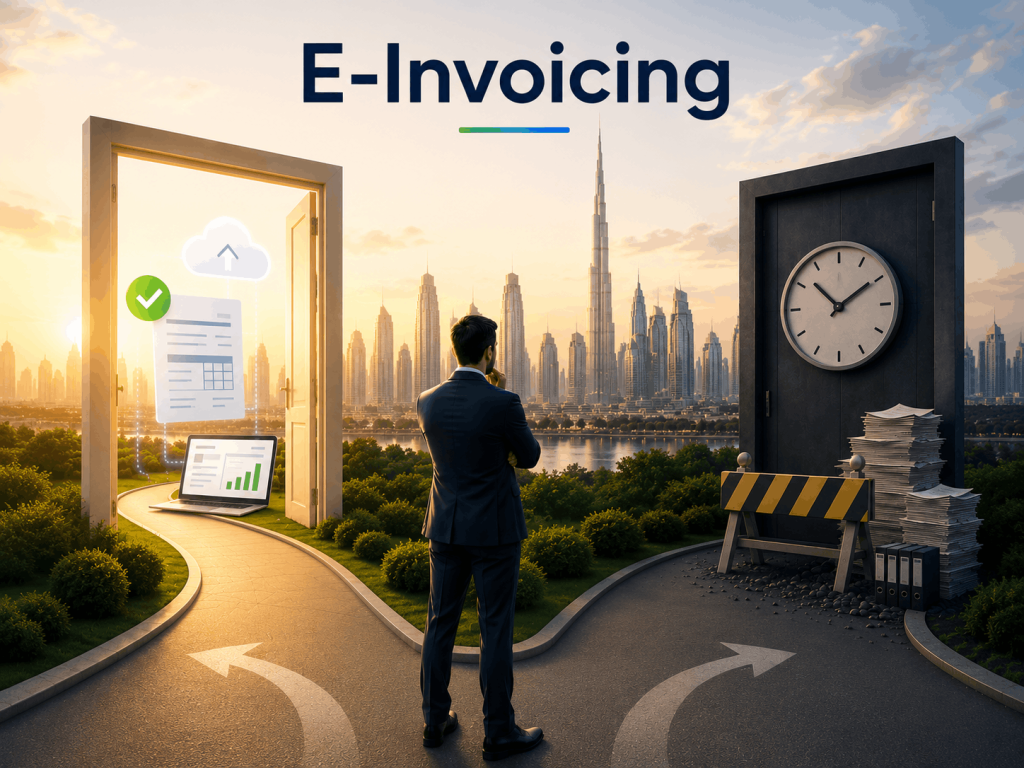
The UAE’s e-invoicing voluntary phase is now live, giving businesses an opportunity to adopt the new digital invoicing system before mandatory implementation begins.
But this raises an important question for business owners: Should you start e-invoicing now, or wait until it becomes mandatory?
For most businesses, the answer is simple: start preparing now, even if you are not ready to go live yet.
What Does the UAE E-Invoicing Voluntary Phase Mean?
The voluntary phase allows businesses to begin adopting UAE e-invoicing ahead of their mandatory implementation date.
Under the UAE framework, e-invoicing involves the electronic creation, exchange and reporting of structured invoice data through the approved ecosystem. A simple PDF invoice sent by email does not qualify as an e-invoice.
The system uses a 5-Corner Model, involving the supplier, Accredited Service Providers (ASPs), buyer and the tax authority.
Businesses can therefore use the voluntary phase to understand the requirements, assess their systems and test their invoicing processes before compliance becomes mandatory.
For a broader overview, see our guide to e-invoicing in the UAE.
Why Start E-Invoicing Early?
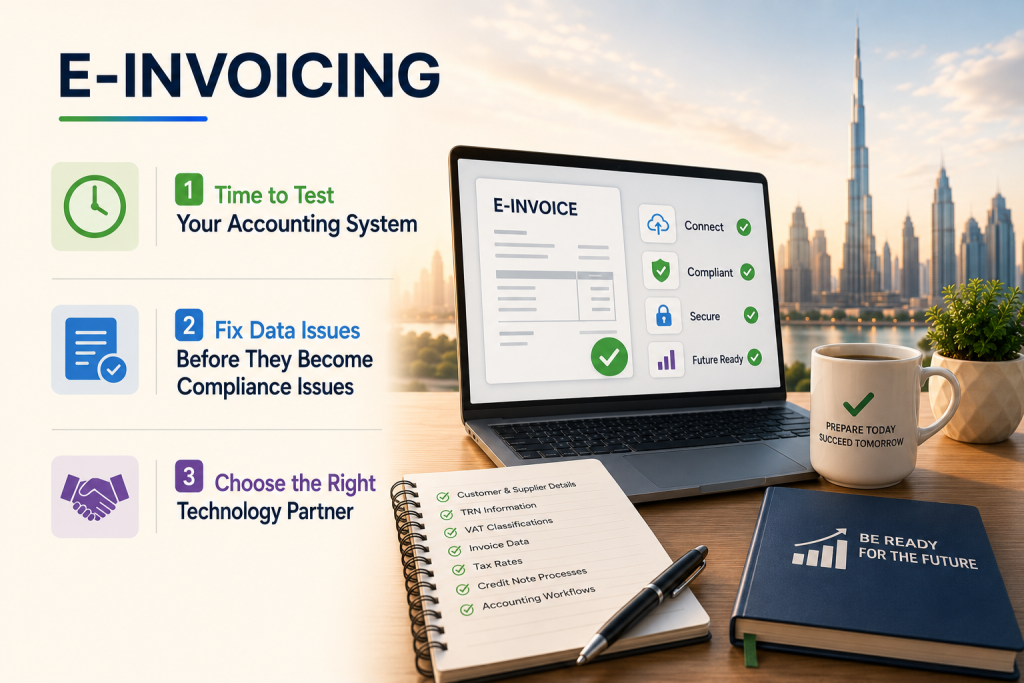
1. You Have Time to Test Your Accounting System
E-invoicing is not simply a change to your invoice template. Your accounting or ERP system needs to be capable of handling the required structured data and connecting with an Accredited Service Provider.
If you use Tally, another accounting platform or a customised ERP, now is the right time to assess whether your system is ready. Our guide on accounting software readiness for UAE e-invoicing covers some of the key areas to review.
2. You Can Fix Data Issues Before They Become Compliance Issues
E-invoicing depends on accurate and structured information.
This makes now a good time to review:
- Customer and supplier details
- TRN information
- VAT classifications
- Invoice data
- Tax rates
- Credit note processes
- Accounting workflows
Cleaning up these areas early can make the eventual transition considerably smoother.
3. You Can Choose the Right Technology Partner
Businesses will need to work within the approved e-invoicing ecosystem and select an appropriate Accredited Service Provider.
Rather than choosing a solution at the last minute, businesses can use the voluntary phase to compare integration capabilities, security, scalability and ongoing support.
For businesses considering TallyPrime, working with an experienced implementation partner can also help align accounting workflows with future requirements. Digits provides Tally Partner services in the UAE, including implementation, optimisation and accounting technology support.
When Does Mandatory E-Invoicing Start?
The UAE is introducing e-invoicing in phases. Businesses should therefore determine their specific implementation timeline based on the latest requirements issued by the UAE Ministry of Finance.
The official UAE Ministry of Finance e-invoicing guidance should be used as the primary source for current deadlines and regulatory updates.
Is Waiting a Bad Idea?
Not necessarily.
If your business has a straightforward invoicing process and its mandatory deadline is still some time away, you may decide not to go live immediately.
However, waiting to implement is different from waiting to prepare.
Businesses that begin assessing their systems now have more time to identify software gaps, clean financial data, select an ASP, train employees and test their workflows.
Leaving everything until the mandatory deadline could create unnecessary pressure and operational disruption.
What Should Your Business Do Now?
A practical approach is to:
- Assess your current invoicing and accounting system.
- Check whether your software can support UAE e-invoicing requirements.
- Review and clean your customer, supplier and VAT data.
- Understand your implementation timeline.
- Research suitable Accredited Service Providers.
- Plan testing and employee training before going live.
The Bottom Line
The UAE’s voluntary e-invoicing phase gives businesses something valuable: time to prepare without waiting for the deadline.
You may not need to implement e-invoicing immediately. But assessing your accounting software, financial data and technology requirements now can help you avoid a rushed transition later.
The question is no longer whether your business should prepare for e-invoicing. It is how early you want to be ready.
If you need help assessing your accounting system or preparing for UAE e-invoicing, Digits can help you build a practical roadmap for a smoother transition.
Follow Us On: